A Twitter creator campaign pairs vetted creators with a tight creative brief and a single measurable goal, then amplifies the results with paid support. The approach that works: pick one primary KPI, run a creator bundle of three to five vetted voices instead of one big name, write a brief tight enough that every post stays on message, and track everything through UTMs. Done right, this is exactly what Nowix builds for tech and AI brands every week.
TL;DR:
- Running a creator campaign effectively relies on selecting one primary KPI and matching creative formats to campaign objectives, such as awareness, consideration, or conversion.
- Budgets should be split into a small test portion, creator tiers aligned with goals, and amplification funds, with a strict four-week schedule to optimize decision-making and execution.
- Vetting creators involves analyzing audience overlap, engagement quality, posting reliability, and brand safety, ensuring alignment with the target market and campaign goals.
- Creative formats must be tailored to objectives, with short videos or bold posts for awareness, threads for consideration, and proof-heavy quote tweets for conversions.
- Controlled amplification and data-driven optimization, including rotating creative and pausing underperformers, are crucial for maximizing ROI and campaign success.
Table of Contents
- When Should You Run a Twitter Creator Campaign?
- Step-by-Step Campaign Plan: KPIs, Budget, and Timeline
- How Do You Choose the Right Creators?
- Which Creative Formats Fit Each Campaign Objective?
- How Do You Measure and Optimize a Creator Campaign?
- What Nowix Has Learned Running Creator Campaigns for Tech Brands
- Ready to Run Your Next Campaign With Nowix?
- Where to Go Deeper on Creator Campaign Execution
- Sources
When Should You Run a Twitter Creator Campaign?
Creator campaigns earn their budget when you need believable, third-party voices to move a specific number, not just fill a feed. Match the campaign type to the objective before you touch a brief:
- Awareness: Concentrated creator bundles posting within a short window generate reach and share-of-voice fast, especially around a launch.
- Consideration: Threads and short videos that walk through a problem and solution outperform single-line promos, per Hootsuite’s ad guidance.
- Conversion: Pair creator posts with promoted amplification and a direct CTA, since organic reach alone rarely closes the loop.
X’s Creator Connect now matches brands to creators using audience data and real-time trends, which speeds up sourcing for any of these objectives. For a full-funnel launch, a timeline takeover (a coordinated wave of creators posting inside a one-hour window) builds momentum that paid ads can then extend once the organic signal is proven.
Step-by-Step Campaign Plan: KPIs, Budget, and Timeline
Run your campaign like performance media, not a favor exchange. That means one number you’re accountable to, a budget split across creators and amplification, and a schedule that everyone can follow.
- Pick one primary KPI. Awareness campaigns track CPM or reach; consideration tracks CTR; conversion tracks CPA or ROAS.
- Set two supporting KPIs. For a product launch, that might be engagement rate and follower growth alongside your primary CPA target.
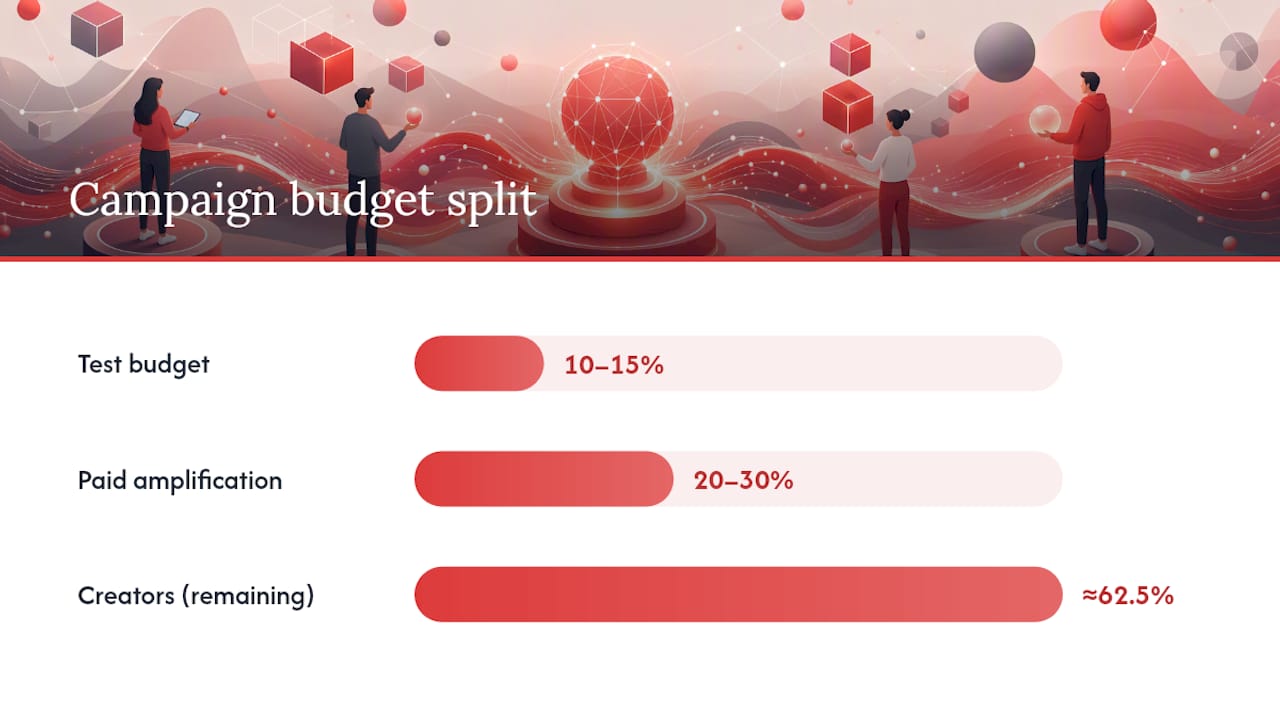
- Budget in three buckets. Reserve a small test budget (10 to 15 percent of total spend), price creators by tier, and hold back 20 to 30 percent for paid amplification once you know which posts are working.
- Run a compact four-week timeline:
- Week 1: Objectives, KPI targets, and creator outreach.
- Week 2: Creative drafts, brand safety review, and signoff.
- Week 3: Launch window, live monitoring, and first optimization pass.
- Week 4: Amplify winners, pause underperformers, and compile the report.
Industry playbooks recommend exactly this repeatable structure because it forces decisions on a schedule instead of waiting for a campaign to “feel” done, per InfluencerDB’s 2026 playbook.
Pro Tip: Assign one owner per week, not one owner for the whole campaign. Handoffs between planning, creative, and launch are where deadlines quietly slip.
How Do You Choose the Right Creators?
Creator tiers determine both your cost and what kind of lift you should expect. Matching tier to objective avoids the two most common budget mistakes: overpaying a mega-creator for a niche technical audience, or under-resourcing a launch that needed reach, not just credibility.
Before you sign anyone, run a quick audit:
- Audience overlap with your buyer persona, not just follower count.
- Engagement quality (replies and quote tweets, not just likes).
- Post history for tone, consistency, and prior brand partnerships.
- Posting frequency and reliability over the last 90 days.
- Brand safety, including any controversial or off-brand content.
Nowix’s guide on finding Twitter influencers covers this vetting process in more depth. When you get to contracts, lock down deliverables, usage rights (can you repost or run their content as an ad?), revision limits, whitelisting access for paid amplification, and any exclusivity window before the creator can work with a competitor.
Which Creative Formats Fit Each Campaign Objective?
The format has to match the job. A single punchy post can carry an awareness spike; a conversion campaign needs proof and a reason to click now.
- Awareness: Short video or a bold single post tends to outperform longer formats, since attention is the only goal.
- Consideration: Problem-solution threads let a creator walk through a real use case, which builds more trust than a straight ad.
- Conversion: Quote tweets and replies from a bundle of creators create social proof around a single core post, then a promoted push extends that momentum.
Every brief needs the same non-negotiables: a lead line strong enough to stop the scroll, a clear CTA, one or two proof points (a stat, a demo, a customer result), a disclosure line, and a short “do not say” list for anything off-brand or legally risky.
Test three creative variants across two audience segments before committing full budget. Watch CTR and reply sentiment in the first 48 hours. That’s usually enough signal to know which creative earns the amplification spend.
How Do You Measure and Optimize a Creator Campaign?
Match the metric to the objective, then give the data time to mean something before you act on it.
- Awareness: Reach and CPM. Formula: total spend divided by impressions, times 1,000.
- Consideration: CTR. Formula: clicks divided by impressions.
- Conversion: CPA and ROAS. Formula: spend divided by conversions, and revenue divided by spend.
Hootsuite’s guidance on Twitter/X ad testing recommends running windows of 7 to 14 days before calling a winner. Don’t touch budget until you’ve hit a minimum of roughly 10,000 impressions or 30 to 50 conversions. Under that, you’re reading noise, not a trend.
Once you have a winner, rotate in fresh creative to avoid fatigue, pause anything underperforming its CPA target after the test window, repurpose the top post as a paid ad, and go back to your best-performing creators for a follow-up post rather than starting a new search from zero.
What Nowix Has Learned Running Creator Campaigns for Tech Brands
Most creator campaigns fail for boring reasons: vague briefs, creators picked for follower count instead of fit, and no plan for amplification once the organic post lands. Nowix built its process around fixing exactly those three failure points, because they’re the ones that quietly burn budget.
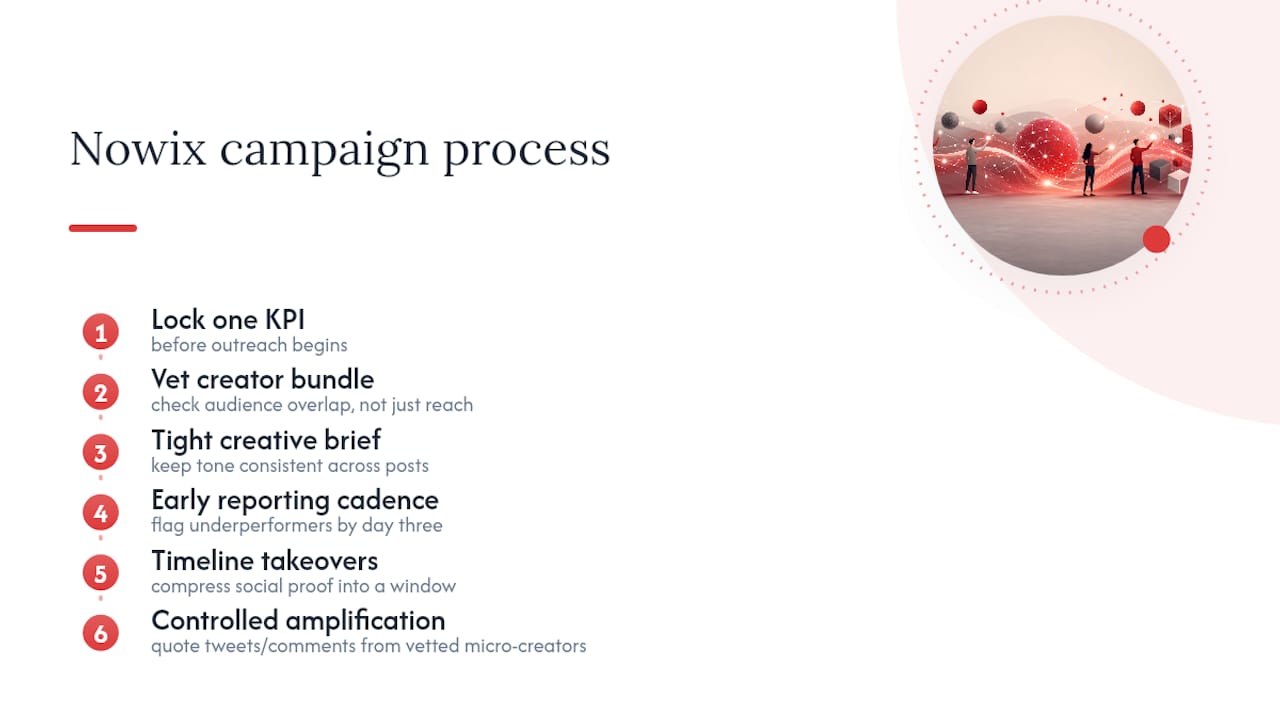
The operational checklist we run internally: one KPI locked before outreach begins, a creator bundle vetted for audience overlap (not just reach), a brief tight enough that tone stays consistent across every post, and a reporting cadence that flags underperformers by day three, not week four. Timeline takeovers work because they compress social proof into a window paid media can’t fake. Controlled amplification, using quote tweets and comments from vetted micro-creators, extends that proof without diluting the message. Nowix’s Twitter brand safety framework and internal creator scoring model both grew out of campaigns where skipping a vetting step cost a client more in cleanup than the campaign itself cost to run.
— Knowix
Ready to Run Your Next Campaign With Nowix?
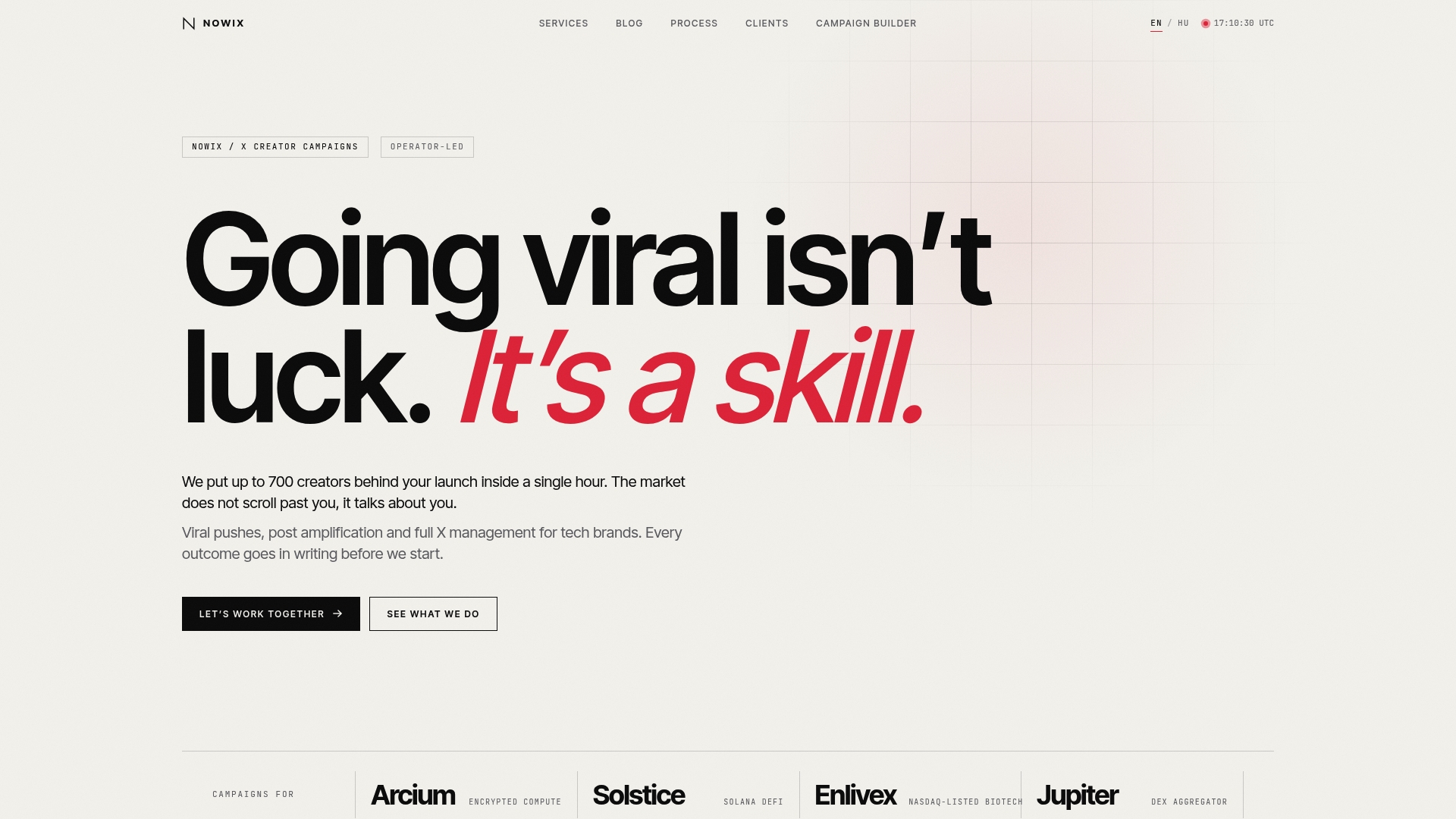
Running a creator campaign in-house means building your own vetting process, negotiating rates blind, and hoping your timeline holds when a creator misses a deadline. Nowix skips that learning curve. We coordinate up to 700 vetted creators inside a one-hour launch window, run controlled post amplification through quote tweets and comments from micro-creators who actually match your audience, and manage the daily account work in between so momentum doesn’t stall between campaigns.
If you’re evaluating an agency, ask for three things before you sign anything: a sample reporting cadence, deliverable timelines in writing, and past results tied to a specific KPI, not vanity metrics. Nowix’s timeline takeover campaigns are built exactly around that standard, pairing a locked KPI with a creator bundle and a four-week execution schedule. Request an estimate and we’ll map your objective to a campaign structure before you commit a dollar.
Where to Go Deeper on Creator Campaign Execution
X’s Creator Connect matching tool and Ads Campaign Creator are the two platform features worth understanding before you brief a single creator. For budgeting specifics, Nowix’s Twitter influencer rates guide breaks down current CPM ranges by tier, and the audience targeting guide pairs well with creator selection for consideration and conversion campaigns.
Sources
- X launches tool matching brands with creators
- X Ads campaign creator - X Business - Twitter
- Twitter influencer marketing: A 2026 SME playbook
Recommended
- The Startup Checklist for a Twitter Viral Campaign on X in 2026
- Twitter Trending Strategy 2026: The Engineered Playbook for Tech Brands
- Best Startup Marketing Agencies for X: Tech & AI CMOs
- Twitter Growth Playbook for Tech Brands 2026
Frequently asked questions
How does a creator quote post differ from a repost?
A quote post adds the creator’s context or perspective to the original post. A repost shares the original without that additional commentary. Choose the format around the explanation your audience needs.
How should paid amplification be reported?
Record the agreed creator deliverables, live post links and available metrics. Identify paid or coordinated activity and keep it separate from unprompted organic response and qualified leads.