Founder Led X Launch for Tech & AI: 30 Day Prep, 1 Hour Creator Push
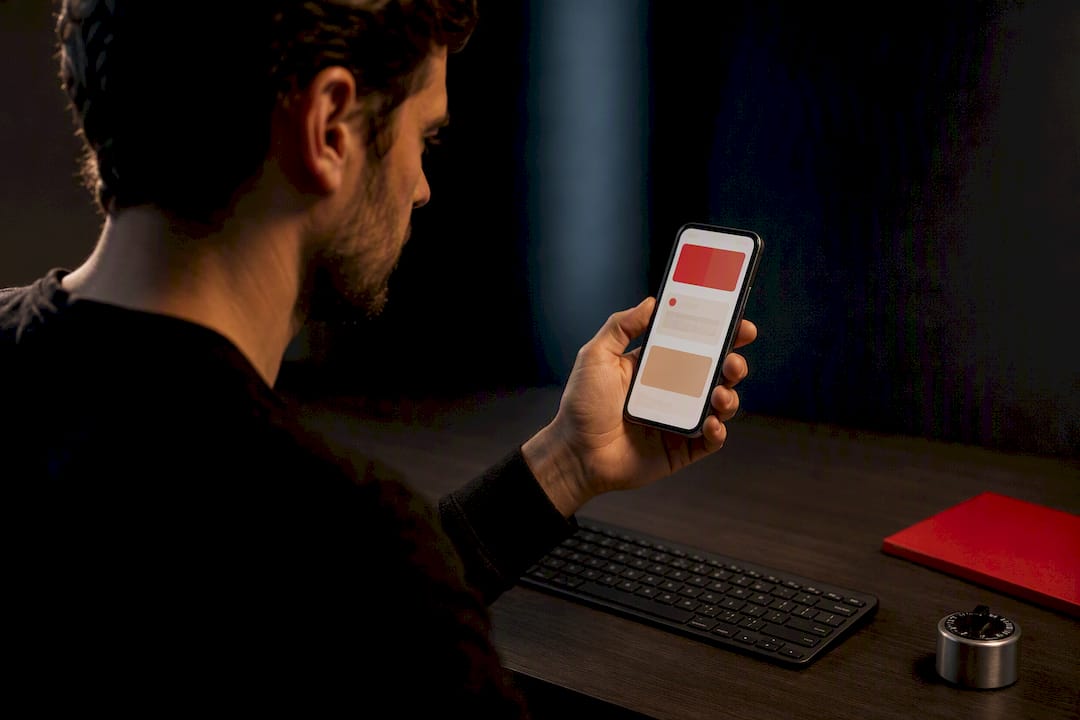
The best way to launch a startup on X is a founder-led thread built around a native demo video, pinned immediately, and pushed by a coordinated block of creators during a single tight window. Success looks like early seeded replies, real sign-ups you can trace with UTMs, and a bookmark curve that keeps pulling traffic days later. This works whether your creator block is five warm contacts doing you a favor or a paid roster you booked for the hour.
TL;DR:
- Launching a startup on X requires locking creative, technical, and human assets 72 hours in advance, with final checks the night before.
- A 30-day pre-launch build involves targeting 30 to 50 relevant operator accounts, engaging consistently, and warming contacts 48 to 72 hours before launch.
- The optimal launch window is Tuesday or Wednesday at 8 to 10 AM Eastern, with a coordinated hour-long push compressing organic reach into the first hour.
- A launch thread should follow a clear structure, starting with a hook, native demo, and ending with a call-to-action, posted in the second tweet, not the first.
- Coordinated creator blocks should follow tiered roles, with real accounts engaging genuinely, and links should be placed at the end or in comments, not in the initial tweet.
Table of Contents
- Quick Launch Checklist: What To Prepare in 7 to 72 Hours
- Pre-Launch Strategy: A 30-Day Sprint To Build an Operator Audience
- Launch Day Playbook: The Hour-By-Hour X Strategy
- Thread Template and Example Launch Thread
- Creator Amplification: Building and Buying Repost Blocks Ethically
- Metrics, Landing Page, and Post-Launch Operations
- Common Launch Mistakes and Recovery Tactics
- Nowix Plays: How Tech and AI Launch Campaigns Actually Run on X
- Perspective: When To DIY a Launch and When To Hire an Agency
- Executing Your X Launch With Nowix
- Sources
- FAQ
Quick Launch Checklist: What To Prepare in 7 to 72 Hours
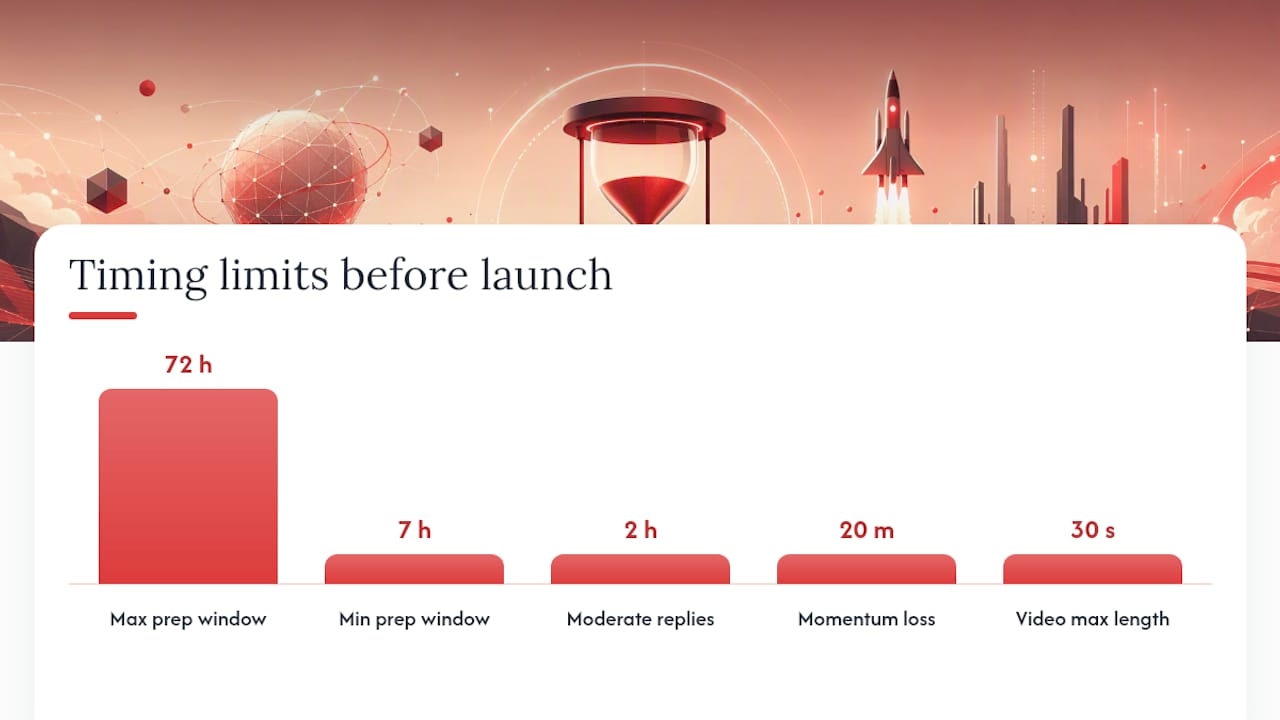
A startup launch on X falls apart when founders start writing the thread the morning of launch. Everything creative, technical, and human needs to be locked 72 hours out, with a final check pass the night before.
Here’s what needs to exist before you touch the tweet button:
- Three hook options for the opening tweet, ranked by how much they provoke curiosity or disagreement.
- A native demo video or GIF under 30 seconds, uploaded directly to X (never a link-out to YouTube).
- A full thread draft, written and timed, following your value points in order.
- A landing page with a headline that matches your hook tweet word for word, not just in spirit.
- UTM parameters on every link, analytics wired up, and a mobile load-time check under 2 seconds.
- A decision on signup flow versus waitlist, made in advance so you’re not improvising at minute 12.
- A creator list finalized, with 15 to 25 warm contacts DM’d directly and assigned specific jobs (reply, quote, repost) rather than a generic “please support us.”
Pro Tip: Assign one person on your team to do nothing but moderate replies for the first two hours. Founders who try to write, post, and reply solo lose the thread’s momentum inside 20 minutes.
The landing page headline mismatch is the most common unforced error here. If your tweet promises “the fastest way to ship AI agents” and your page headline says “enterprise automation platform,” you lose half your clicks before anyone reads a word of copy.
Pre-Launch Strategy: A 30-Day Sprint To Build an Operator Audience
If you’re starting from zero followers, launch day cannot be your first day on X. Give yourself 30 days to build what the Causo Hub guide calls an operator audience: a small, dense group of accounts run by people who actually build and ship things in your category, not just spectators.
- Define your operator list. Pick 30 to 50 accounts run by founders, engineers, or investors active in your specific niche. Your real target metric here isn’t follower count, it’s getting 5 to 10 of those operators to follow you back before launch.
- Run a content sprint for 30 days. Post about the problem you’re solving, not the product. Share what you’re learning in public as you build. Keep a 4 to 1 reply-to-post ratio: for every original post, spend four times as much energy replying to other people’s threads in your space.
- Warm up your network 48 to 72 hours before launch. DM the operators and warm contacts who’ve engaged with you and ask directly for a repost or a reply on launch morning. Specificity matters. “Can you repost at 8:05 AM ET when I post the thread?” gets a better response than “would love your support.”
This sprint matters because X still functions as one of the densest real-time buying signals available to founders, according to EarlyCustomers’ lead generation research, but only when the account posting has some pre-existing trust. A cold account launching cold gets ignored by both humans and the algorithm. An account that spent 30 days replying inside its niche walks into launch day with a runway already built.
Launch Day Playbook: The Hour-By-Hour X Strategy
Timing decides more of your launch than most founders want to admit. The baseline window that performs best across tech and AI launches is Tuesday or Wednesday, 8 to 10 AM ET, according to the Flowjam hour-by-hour X playbook. If your audience skews European or Asia-Pacific, shift that window to catch their morning scroll instead of forcing US timing on a non-US audience.
The compressed-attention effect: A coordinated single-hour push, meaning a founder’s hook tweet, a native video, and a tiered creator block firing in sequence, can compress what used to take 24 hours of organic reach into the first 60 minutes after posting, per Flowjam’s data.
Here’s the sequence that produces that compression:
- Minute -60: Warm-up actions. Post a teaser reply in an active thread, DM your tier-1 creators a final “we’re live in an hour” note, and open your analytics dashboard.
- Minute 0: Founder posts the hook tweet with the native demo video attached directly. Pin it to your profile within 60 seconds.
- Minute 2 to 5: Tier-1 creators (your 3 to 5 biggest anchors) repost or quote-tweet with genuine reactions, not copy-pasted praise.
- Minute 10 to 30: Tier-2 creators (10 to 15 accounts) engage with replies and quote tweets, spacing themselves rather than dropping all at once.
- Minute 30 to 60: Tier-3 accounts (5 to 10 smaller, highly engaged profiles) add replies that boost the bookmark count and keep the thread visible in search.
- Minute 60 to 120: Founder replies to every substantive comment, live, in the thread. This single habit does more for algorithmic reach than almost anything else on this list.
Sequencing rules matter as much as timing. Your demo needs to land by the second tweet in the thread, not buried on tweet six, according to Welaunch. Never put your external link in the first tweet. X’s distribution algorithm treats outbound links as a signal to suppress reach, so the link belongs in the last tweet of the thread or in the top reply, posted a minute or two after the thread goes live. Treat any social proof (sign-up counts, press mentions, a surprising usage stat) as an ongoing reply, dripped out over the first two hours rather than dumped all at once.
Thread Template and Example Launch Thread
A launch thread works because it keeps a reader moving forward one tweet at a time, and each additional second of dwell time is a signal the algorithm rewards, based on welaunch.sh’s structural analysis. Here’s the role each tweet in the sequence should play:
- Hook. One sharp claim or a specific, surprising number. No throat-clearing.
- Demo. A native GIF or short video showing the product actually working. This is the tweet people screenshot.
- Origin. One or two sentences on why you built this, tied to a real problem you or someone you know had.
- Value points (3 to 5 tweets). Each one standalone, each one answering “why does this matter to me.”
- Honest limitation. State clearly what the product doesn’t do yet. This single tweet builds more trust than five more feature claims.
- Social proof. Early users, a waitlist number, a notable person who tried it.
- CTA. The link, placed here or in the first reply, plus an explicit ask: “Reply if you want early access” or “Repost if this solves a problem you’ve had.”
Pro Tip: Write each tweet as one or two short sentences. A launch thread is not the place for a paragraph. If a tweet needs three sentences to make its point, split it into two tweets instead.
This bot answers all of them in under a second." A 6 to 8 tweet product launch thread built on this skeleton, demo by tweet two, limitation by tweet six, link in the final tweet, consistently outperforms threads that save the demo for later or skip the honesty tweet entirely.
Creator Amplification: Building and Buying Repost Blocks Ethically
Creator amplification is not the same thing as buying fake engagement, and the distinction matters for both your reputation and the algorithm’s trust signals. A tiered creator block, structured correctly, is legitimate seeding: real accounts, real reactions, timed to concentrate attention the way organic virality would happen anyway, just faster.
- Tier 1 (3 to 5 accounts): Anchors with real audiences in your category. They quote-tweet with genuine commentary, not boilerplate praise.
- Tier 2 (10 to 15 accounts): Engagement engines. Mid-size accounts whose replies and reposts keep the thread visible through the first 30 minutes.
- Tier 3 (5 to 10 accounts): Long-tail repliers. Smaller but highly active accounts whose comments boost the bookmark and reply count that keeps a thread surfacing in search for days.
Rate ranges for paid creator slots vary widely by follower count and niche, so negotiate a short rehearsal call and a fixed timing window rather than a vague “post sometime today” arrangement, following the tiered structure Flowjam recommends for launch-day coordination. Build a one-page brief covering tone, what not to say, and exact posting time. Never send every creator the identical copy to repost. Mass-identical language is one of the fastest ways to trip spam detection and get an entire block throttled at once.
Metrics, Landing Page, and Post-Launch Operations
Track five numbers during and after launch: impressions, bookmarks, profile clicks, UTM-tagged link clicks, and reply engagement rate. Bookmarks deserve more attention than founders usually give them. A strong Flowjam signal shows bookmark-heavy threads keep surfacing in search results for days after the initial push, well past when the repost wave has faded.
Your landing page needs three things and nothing more: a load time under 2 seconds on mobile, a headline that matches your hook tweet exactly, and a signup form that doesn’t require six fields to complete. Every additional field costs you conversions you’ll never see in your analytics.
Post-launch operations in the first 24 hours decide whether the momentum compounds or dies:
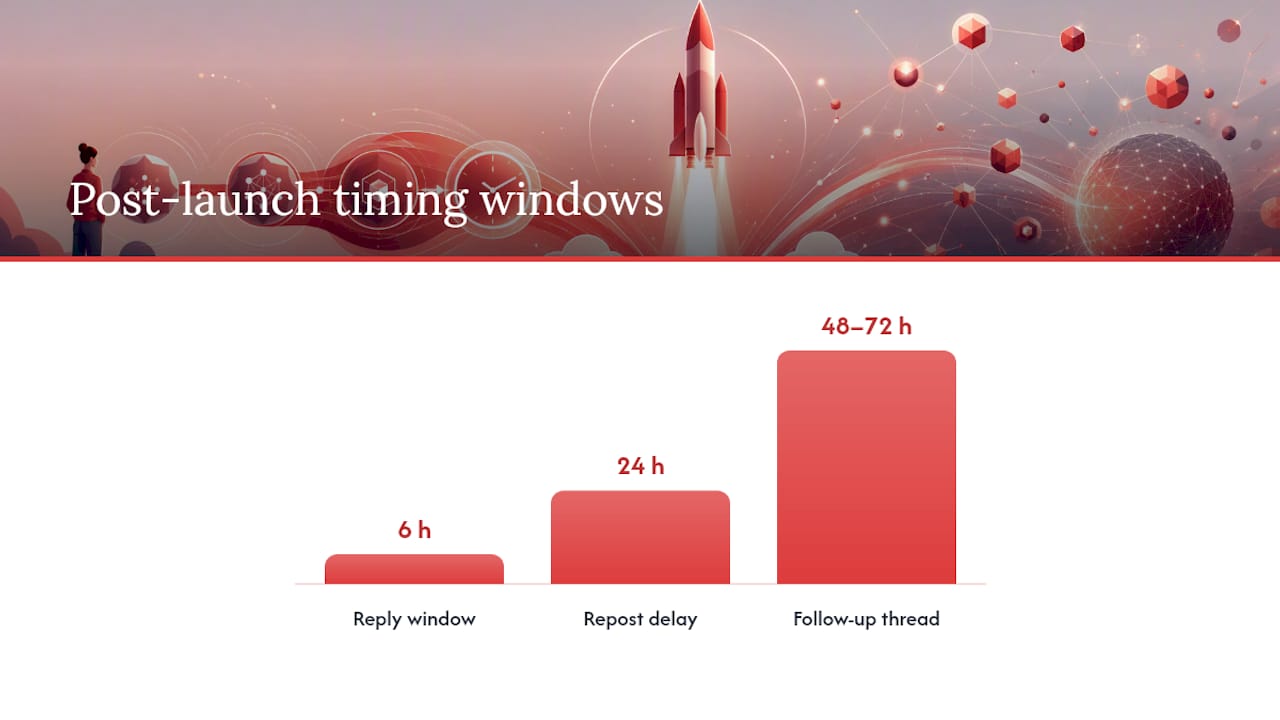
- Keep replying to every comment for at least six hours, not just the first 60 minutes.
- Quote-tweet strong replies from users instead of just liking them.
- Repost the original thread after 24 hours with a fresh update: a sign-up number, a piece of press, a feature you shipped overnight.
- Publish a short follow-up thread within 48 to 72 hours answering the most common question from replies.
Common Launch Mistakes and Recovery Tactics
The recurring errors are predictable: putting your link in the first tweet, skipping the demo entirely, going quiet after the founder tweet posts, overselling with no honest limitation, and launching with zero warm network to seed the first replies, based on patterns Flowjam and welaunch.sh both flag across underperforming launches.
If a launch stalls, act fast:
- Pause any paid creator amplification that’s still scheduled. Don’t throw money at a thread that isn’t landing.
- Post an honest update tweet acknowledging the slow start. Founders who do this often see a second wave of goodwill engagement.
- Repost with a new hook or added proof point rather than reposting the identical tweet.
- Check your landing page for friction (load time, form length, headline mismatch) before assuming the copy failed.
Debrief within 48 hours: pull your actual numbers, test one new hook on a smaller post, and apply what worked to your next launch.
Nowix Plays: How Tech and AI Launch Campaigns Actually Run on X
Nowix runs launch campaigns for tech and AI brands built around the exact mechanics above: a founder-led thread, a native demo, and a coordinated creator block that is executed by operators who run credible X profiles themselves rather than a generic media buying desk.
- Coordinating a large number of creators within a single one-hour launch window.
- Building quote-retweet and comment amplification from micro-creators, timed the way tiered creator blocks work.
- Running full X account management including strategy, daily content, replies, and community engagement between launches.
- Publishing real campaign documentation, including outcomes like the Enlivex case study, where a coordinated push of over 600 creators became the top trending story of the day.
Realistic outcomes depend on your product, your existing network, and your budget for creator coordination. A brief consult is the fastest way to find out what a launch on your specific timeline and audience would actually look like.
Perspective: When To DIY a Launch and When To Hire an Agency
Three questions settle this fast: How large is your existing warm network? Do you have real creator relationships, or would you be cold-emailing strangers? Do you have the bandwidth to reply live for two straight hours on launch day? If your answers lean thin, a condensed DIY list built entirely from warm contacts still beats a paid block run poorly. If you’re short on time or creator access, prioritize a team that can execute live and coordinate creators in real time. If you can’t answer all three questions confidently right now, that’s your answer already.
— Knowix
Executing Your X Launch With Nowix
Nowix exists for the exact moment covered in this playbook: the hour when a thread either catches fire or quietly dies in a feed nobody scrolls back to. Where a DIY founder is limited to whatever warm contacts they can DM in 72 hours, Go Viral on X coordinates up to 700 creators inside a single one-hour window, giving your launch the tiered repost cadence this article walks through at a scale most founders can’t assemble alone.
If your launch already happened and you’re trying to keep the wave going rather than start one, Amplify Your Reach handles the controlled quote-retweet and comment amplification that turns a good 24 hours into a sustained bookmark curve. And if the real problem is that nobody’s driving your account between launches, X Management covers daily content, replies, and community work so the operator audience you built during your 30-day sprint doesn’t go cold the week after launch. Book a consult through the Go Viral on X page to map your launch window against a real creator plan before you pick a date.
Sources
- Launch Day Twitter Strategy 2026: The Hour-by-Hour X Playbook | Flowjam
- Welaunch
- Twitter / X Lead Generation Guide for Founders & SaaS (2026) | EarlyCustomers
FAQ
What Is the Best Day To Launch a Startup on X?
Tuesday or Wednesday between 8 and 10 AM ET is the strongest baseline window, though founders with non-US audiences should shift to match their audience’s morning scroll instead.
How Many Creators Do I Need for a Launch?
A tiered structure of 3 to 5 tier-1 anchors, 10 to 15 tier-2 accounts, and 5 to 10 tier-3 repliers covers most launches; Nowix’s Go Viral on X service can coordinate up to 700 creators for larger pushes.
Should My Launch Link Be in the First Tweet?
No. Placing an outbound link in the first tweet gets suppressed by X’s distribution algorithm; save it for the last tweet in the thread or the top reply.
How Long Before Launch Should I Start Building My Audience?
Plan for a 30-day pre-launch sprint focused on operator follows and a 4 to 1 reply-to-post ratio rather than raw follower count.