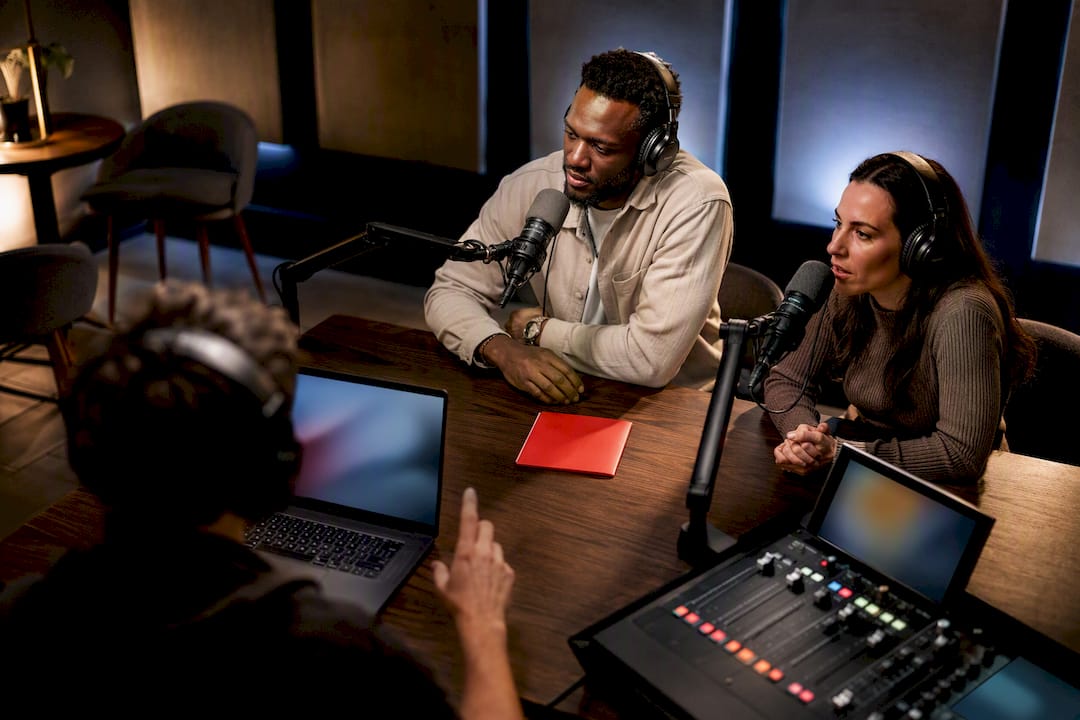
Hiring an agency to run and amplify an X Spaces launch is one of the more reliable ways to build momentum for a tech or AI product, because it centralizes execution and turns a single live session into weeks of repurposable content. A well-run agency handles host selection, live amplification, and post-event clips and threads that keep extending reach after the mic goes off. This article breaks that process into an 8-step playbook plus the measurement and vendor-selection details you need to brief one.
TL;DR:
- A well-executed Spaces launch relies on specific planning, including goal setting, host selection based on relevance, and advanced scheduling to maximize visibility.
- The agency’s role includes technical rehearsals, script preparation, and coordinated amplification during the event through micro-influencers and partner engagement.
- Post-event, immediate content repurposing like clips and threads, combined with targeted amplification, significantly extends the launch’s reach and impact.
- Metrics such as unique listeners, peak concurrent listeners, engaged minutes, and conversion data are essential for measuring launch success accurately.
- Costs vary based on creator network size, scope of promotion, and repurposing depth, with ongoing retainer options for brands running recurring Spaces and broader account management.
Table of Contents
- Why Hire an Agency for Your Twitter Spaces Launch
- How Do You Run a Twitter Spaces Launch Step by Step?
- What Amplification Tactics Work Before, During, and After a Space?
- What Metrics Show Whether the Launch Worked?
- How Do You Choose the Right Agency for a Spaces Launch?
- What Should You Ask an Agency Before Hiring Them?
- What Does an Agency-Run Spaces Launch Typically Cost?
- What Does the Full Campaign Timeline Look Like?
- What Operators Get Wrong About Running a Spaces Launch
- How Nowix Runs or Amplifies Your X Spaces Launch
- Sources
Why Hire an Agency for Your Twitter Spaces Launch
Running a twitter spaces launch yourself is possible. Running one that actually moves the needle for a tech or AI product is a different job, and it’s the reason most founders end up outsourcing it.
Spaces show up as purple bubbles at the top of the timeline, one of the more visible organic placements X still offers. That visibility only pays off if the timing, seeding, and speaker lineup are engineered around it, and that engineering is what an agency actually sells. The platform itself has doubled down on this with dedicated brand-facing features, a signal that X wants marketers building product launches into the format.
An agency earns its fee in three specific places:
- Creator coordination: recruiting cohosts whose audiences overlap with your ideal customer, not whoever has the biggest follower count.
- Operational reliability: running tech rehearsals, confirming recording is live, and scripting the first five minutes so early listeners don’t bail during a fumbled opening.
- Amplification stacking: coordinating quote retweets, DM seeding, and creator shares in a sequence that turns paid momentum into organic pickup.
Pro Tip: Ask any agency you’re evaluating to walk you through their “first five minutes” script before you sign anything. If they don’t have one, they haven’t run enough of these to know it matters.
An experienced agency has built its playbooks around exactly this sequencing, treating the launch less like a broadcast and more like a coordinated push across a creator network.
How Do You Run a Twitter Spaces Launch Step by Step?
A tight, sequential process is what separates a Space that trends from one that fizzles at 40 listeners. Here’s the 8-step version Nowix uses to brief campaigns and the version you should hold any agency to.
- Set goals and KPIs first. Decide whether the primary metric is signups, waitlist joins, or brand awareness before you book a single guest. This shapes every other decision downstream.
- Pick a curator host plus 2 to 4 cohosts with audience overlap. The host drives pacing and keeps the conversation from wandering; cohosts should already have followers who look like your buyer, not just a large count.
- Schedule 48 to 72 hours out. Scheduling in advance lets X generate reminder cards that surface the event to followers automatically, and platform guides recommend at least a 48 hour window for this to work.
- Prep the asset kit. Teaser tweets, a short audio clip, speaker bios, cover imagery, and a pinned announcement post all need to exist before promotion starts, not the morning of.
- Rehearse live, not just on paper. Run a full technical check, walk through the opening script out loud, and confirm recording is switched on before you go live. Recording can’t be turned on mid-stream, so this step is non-negotiable.
- Amplify while you’re live. Cohosts share on cue, invited partners drop in, and vetted micro-influencers post managed quote retweets timed to key moments in the conversation.
- Repurpose immediately after. Cut 3 to 6 highlight clips, draft a 6 to 8 tweet recap thread, and turn at least one clip into a short vertical video for other channels using AI to speed content creation. A 45 minute session mined well can carry a full week of content on its own.
- Report and iterate. The agency should hand back listener counts, engagement minutes, clip performance, and a short list of what to change for the next Space.
Skip any of these eight and you’re not really running a launch. You’re hosting a call and hoping people show up.
What Amplification Tactics Work Before, During, and After a Space?
Amplification isn’t one push. It’s three distinct phases, each with its own tactics, and agencies that treat them as separate campaigns tend to outperform ones that treat the whole thing as a single announcement.
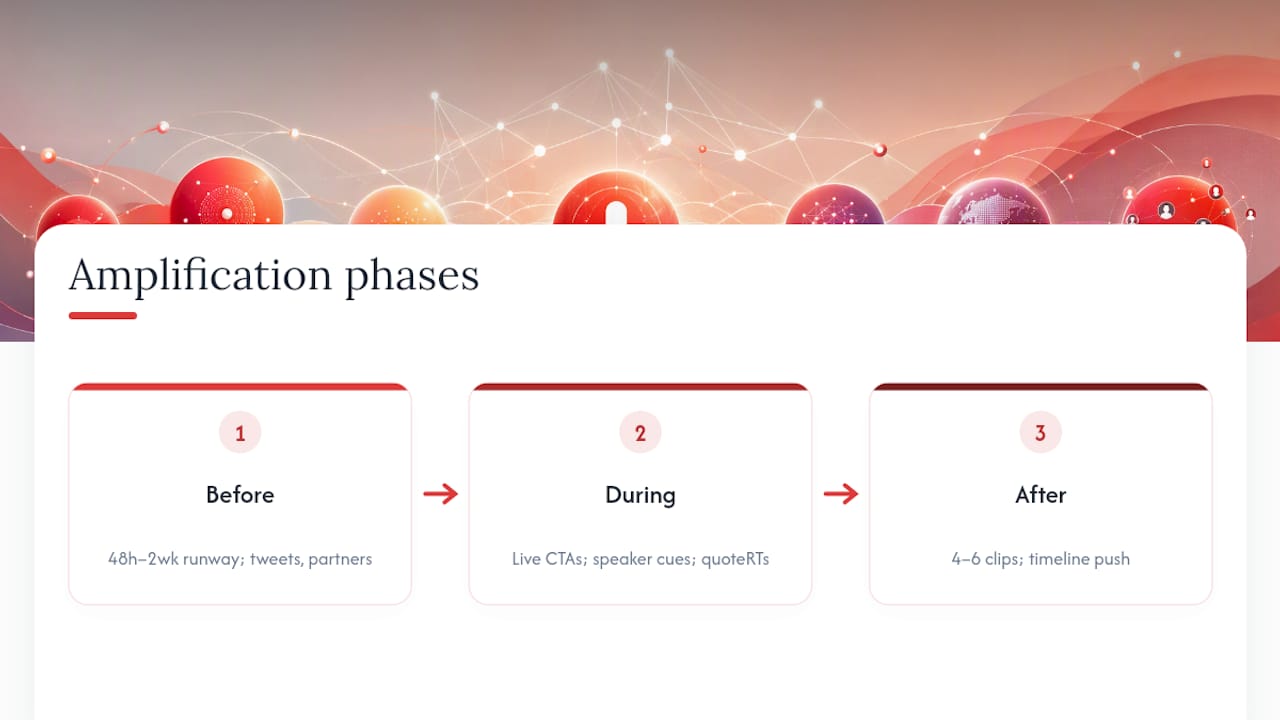
Before the event, the cadence is scheduled tweets spaced over 48 hours, a pinned post on the profile, direct outreach to partner accounts for co-promotion, and creator seeding so a handful of relevant voices mention the Space ahead of time. Scheduling up to two weeks in advance gives the widest promotional runway, though most tech launches compress this into a tighter 48 to 72 hour window to keep urgency high.
During the event, the agency scripts specific CTA moments, cues speakers on when to mention the product, and times quote retweets from vetted micro-influencers to coincide with the strongest parts of the conversation. This is where audience overlap matters more than reach: a cohost with 8,000 followers who all work in your exact niche beats one with 200,000 followers who don’t.
After the event, the priority shifts to clip-first repurposing, typically 4 to 6 clips pulled from a 30 to 45 minute session, feeding a short “timeline takeover” style push across the following days. If organic amplification stalls, a targeted paid boost on the strongest clip can extend the tail.
The rule that ties all three phases together: social audio strategy favors relevance over raw follower counts, because a Space converts through trust, not impressions.
What Metrics Show Whether the Launch Worked?
An agency report worth paying for centers on a specific set of numbers, not a vague “great turnout” summary.
| Metric | What it tells you |
|---|---|
| Unique listeners | Total reach of the live session |
| Peak concurrent listeners | Strength of the room at its busiest moment |
| Engaged minutes | How long people actually stayed, not just tuned in |
| Link clicks | Whether the CTA moments converted attention into action |
| Conversions from Space assets | Signups or purchases traced back to the event and its clips |
Repurposing has its own cadence: expect clips within 24 to 48 hours, the recap thread same day or next morning, short vertical videos within a few days, and a replay promotion push the following week. A 45 minute recording generally supports 3 to 6 usable clips plus a thread, which is the baseline you should hold any vendor to.
When you read the report, check the attribution window the agency used for conversions, how individual clips performed relative to each other, and whether they gave you concrete next-step recommendations instead of just a recap of what happened.
How Do You Choose the Right Agency for a Spaces Launch?
Three things separate a capable agency from one that’s just winging it: expertise, track record, and pricing transparency.
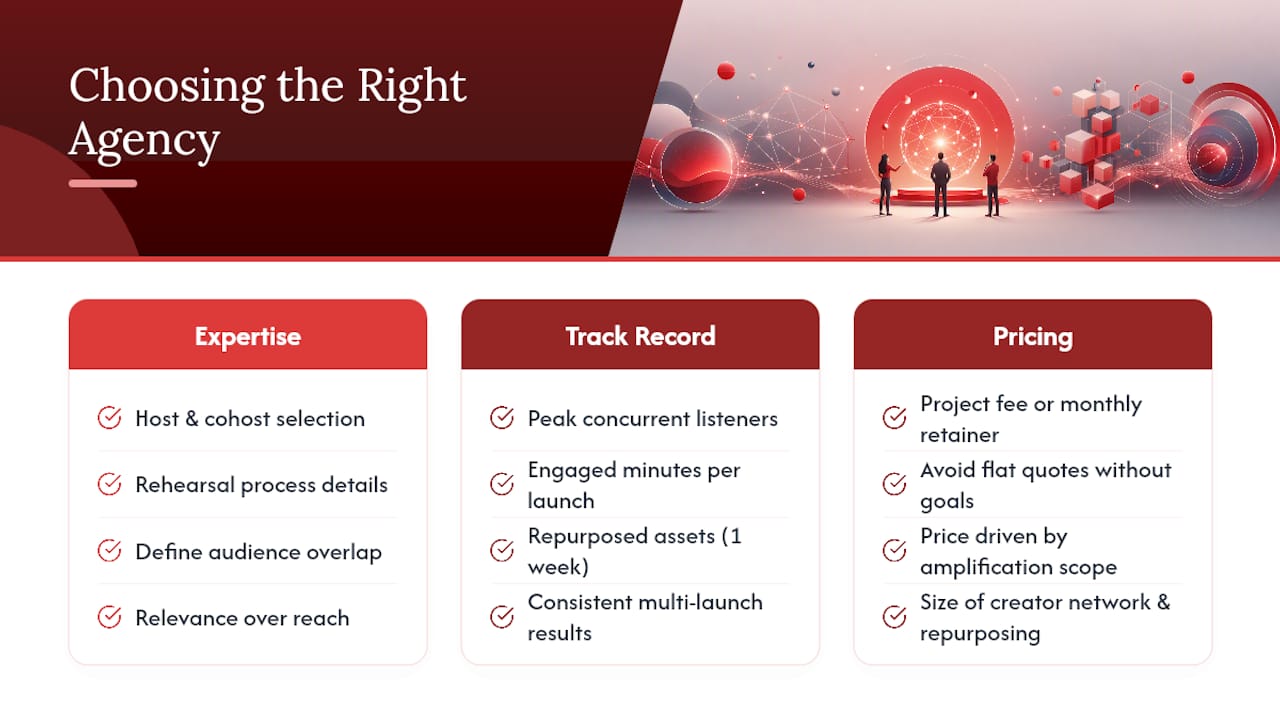
Expertise shows up in specifics, not slogans. Ask how they structure host and cohost selection, what their rehearsal process looks like, and how they define audience overlap. An agency that talks about “influencer reach” without qualifying it by relevance hasn’t internalized the format’s actual strength.
Track record matters more for Spaces than for most campaign types, because live audio has no retakes. Ask to see a past launch’s numbers: peak concurrent listeners, engaged minutes, and what the repurposed assets looked like a week later. A single trending moment means less than consistent execution across several launches.
Pricing for this category tends to fall into project-based fees for a single launch push or a monthly retainer if you’re planning recurring Spaces alongside broader account management. Be wary of anyone quoting a flat number without asking what your goals are first. Amplification scope, the size of the creator network involved, and how much repurposing you need all move the price, and a serious agency will walk you through those variables before naming a figure.
The right partner treats your launch like a coordinated campaign with a creator network behind it, not a booking service that shows up, presses record, and leaves you to handle the aftermath yourself.
What Should You Ask an Agency Before Hiring Them?
A short list of pointed questions will tell you more than any pitch deck.
Start with execution: “Walk me through your last three Spaces launches, and what were the peak concurrent listener numbers?” Vague answers here are a red flag. Follow with process: “What does your rehearsal look like, and who confirms recording is enabled before we go live?” Any agency without a clear answer hasn’t run enough of these under pressure.
Ask directly about creator selection: “How do you choose cohosts, and how do you measure audience overlap with our target buyer?” You want a methodology, not a follower-count justification.
Push on repurposing specifics: “What clips, threads, and videos will we receive, and on what timeline?” This should be spelled out in the statement of work, not left as a vague promise. Ask what happens if a Space underperforms; a mature partner has a plan for amplifying a smaller room, not just a script for hits.
Finally, ask about reporting: “What metrics are in the post-event report, and how do you attribute conversions?” If the answer is a screenshot of listener count and nothing else, keep looking.
What Does an Agency-Run Spaces Launch Typically Cost?
Costs split into two structures: a one-time project fee for a single launch push, or a monthly retainer if the Space is part of ongoing account management.
For a single launch, the price mainly moves with three variables. The size of the creator network involved in amplification is the biggest factor, since coordinating dozens of vetted micro-influencers for quote retweets costs more than a handful of cohost shares. The scope of pre-event promotion matters too: a multi-day teaser campaign with scheduled tweets and partner seeding costs more than a same-day push. Repurposing depth is the third lever, since a package that includes 6 clips, a full recap thread, and short vertical videos for other platforms takes more production time than a bare-bones highlight reel.
Retainer pricing tends to make sense for brands planning recurring Spaces as part of a broader X presence, where the agency also handles daily content and community replies between events. That structure spreads cost across a longer relationship instead of concentrating it into one launch week.
Whichever structure you choose, ask what’s included versus billed as an add-on. Paid boosts on underperforming clips, extra creator outreach beyond the initial roster, and rush repurposing turnarounds are common places where scope creeps past the original quote.
What Does the Full Campaign Timeline Look Like?
An agency-led Spaces campaign generally runs across three phases, and knowing the shape of each one helps you set internal expectations before the work starts.
Planning (roughly 1 to 2 weeks out) covers goal setting, host and cohost recruitment, and asset creation: teaser tweets, bios, cover imagery, and the pinned announcement post. This is also when scheduling happens, ideally landing in that 48 to 72 hour promotional window before go-live.
Execution (event day and the 48 hours before it) covers final rehearsal, the live amplification push, and the session itself. This is the shortest phase by calendar time but the one where a fumbled first five minutes can undo weeks of setup.
Follow-up (the week after) is where repurposing happens: clips within a day or two, the recap thread same day or next morning, short videos within days, and a replay promotion push the following week. The post-mortem report typically lands at the end of this phase, closing the loop with numbers and recommendations for the next Space.
Most tech and AI brands should budget two to three weeks total from first planning call to final repurposed asset, tighter if the agency already has a creator network warmed up for your niche.
What Operators Get Wrong About Running a Spaces Launch
The biggest mistake founders make is treating a Space like a webinar with better branding. It isn’t. Listeners bail fast if the first five minutes don’t deliver something specific, so demand an opening script, not just a rundown of talking points.
Recording is a one-way switch. If your agency can’t confirm, in writing, that it was enabled before go-live, you have no repurposing assets and no fallback if the live numbers disappoint. Every statement of work should name exact clip counts and delivery dates, not a vague promise to “share highlights later.”
— Knowix
How Nowix Runs or Amplifies Your X Spaces Launch
Nowix is built for exactly this: coordinating the creator network, the timing, and the repurposing that separates a Space that trends from one that quietly disappears. For a launch moment, that means timeline takeover campaigns using up to 700 creators inside a one-hour window, timed quote retweets and comments from vetted micro-influencers, and a repurposing plan built into the brief from day one, not bolted on after the fact.
A typical project runs the full arc: planning and asset prep in the first week, live amplification on launch day, and clips, threads, and short videos delivered within days of the recording. If you already have an X presence you want to keep active between launches, ongoing account management covers daily content and replies so the momentum from one Space doesn’t go cold before the next. For brands that just want the launch push amplified without a full account handoff, organic post amplification extends reach on the recap thread and top clips after the room closes.
Send over your launch date and goals, and the agency will map the creator network and timeline against them before you commit to a full campaign.
Sources
For platform mechanics and behavior patterns, the theStacc glossary on X Spaces and Brandwatch’s brand guide to live audio cover scheduling and format basics well. Nowix’s own guides on organic reach mechanics and turning a launch into a tweet thread go deeper into the repurposing side covered above.
- X Spaces: Definition, How It Works & 2026 Guide | theStacc Glossary
- X Spaces: A Brand’s Guide to Live Audio | Brandwatch
Recommended
- How to Launch an AI Product on Twitter: The Founder’s Playbook
- Launch in 30 Minutes with Twitter Card Optimization for Tech & AI
- Ship a 6–8 Tweet Product Launch Thread in 5–7 Days for Founders
- Twitter Community Management for Brand Teams in 2026
Frequently asked questions
What should be ready before a brand launch on X?
Prepare the approved announcement, audience, product proof, destination link, publishing owner and follow-up plan. Where creators are involved, confirm the brief and delivery window.
Can a launch plan guarantee a trend or sales?
No. Agree the work and reporting before launch, then measure delivered activity, observed reach and recorded website actions separately.